
TRY · MOVE
HORSE RIDING
A beginner's guide to horse riding.
Essential information about horses, equipment and your first time in the saddle.
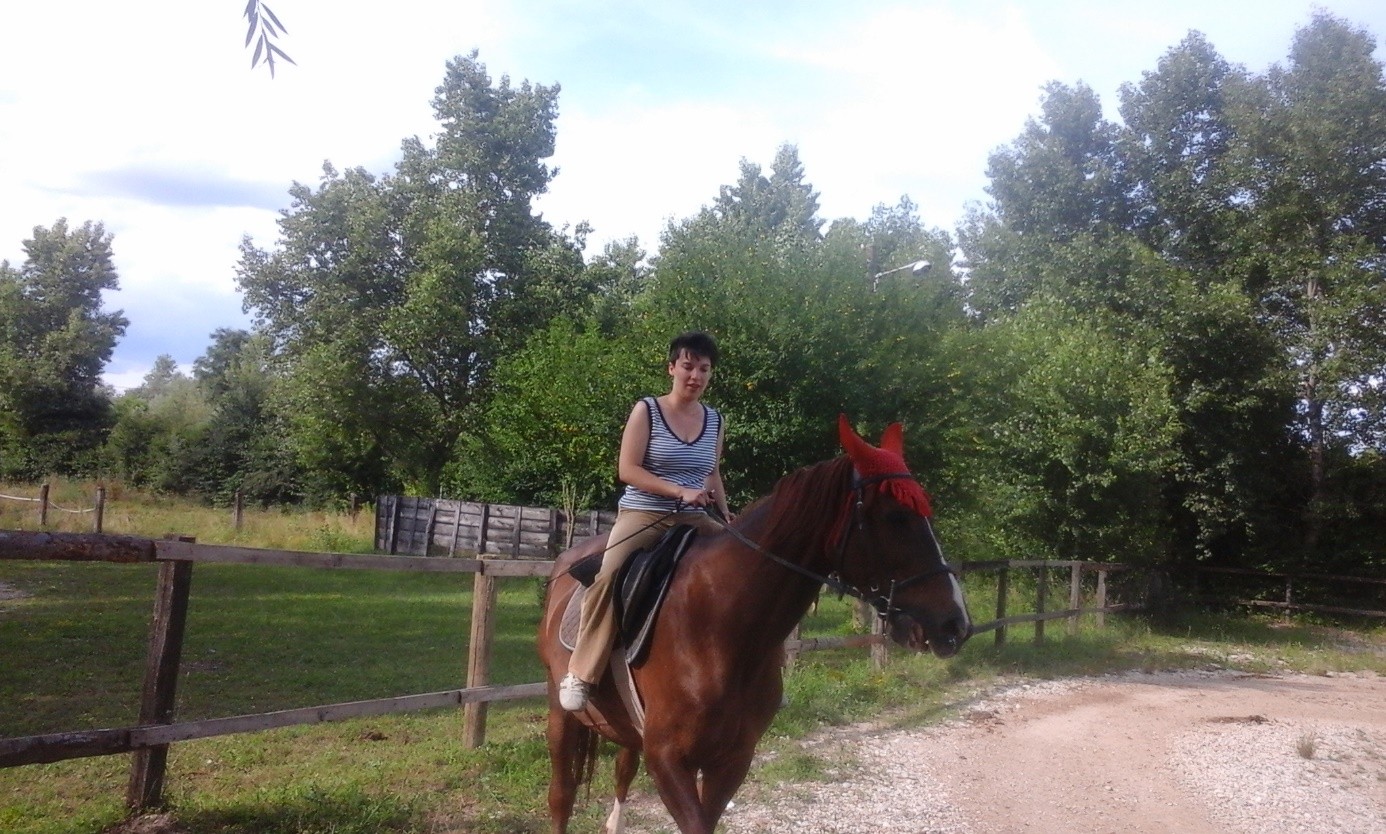
01 / YOUR FIRST TIME IN THE SADDLE
CONGRATULATIONS!
You've decided to get in the saddle for the first time.
Every beginning is difficult, and when you add an animal with a will of its own weighing around 550 kg, choosing this sport may not have felt like an easy decision. But you've taken the first step and shown an interest — which is the right approach.
The aim of this guide is to give you a basic overview of equestrian sport and horse riding in general. You'll find essential information about horses, the equipment you need and the basics of how to behave when approaching a horse.
The goal is to encourage both children and adults to try this sport while improving their physical and mental fitness.
02 / WHAT YOU NEED
FOR YOUR FIRST LESSON
YOU NEED
✓ Leggings, tracksuit bottoms or riding breeches
✓ Long trousers
✓ Closed footwear
✓ Trainers or low ankle boots with a flat sole
✓ A safety helmet
✓ A top or sweatshirt suitable for the weather
✓ A positive attitude
YOU DON'T NEED
✕ Previous experience
✕ Riding boots
✕ Expensive riding clothes
Slimmer, stretchy trousers are more comfortable because seams are less likely to rub. Avoid jeans, as they can cause uncomfortable friction.
Regardless of age, wearing a safety helmet and suitable footwear is essential — closed shoes or boots, never sandals — as well as long trousers.
Trainers or low ankle boots should not have an excessively wide or heavily treaded sole that could become caught in the stirrup.
The riding club will usually provide a helmet if needed. For children, wearing one is mandatory.
03 / YOUR FIRST LESSON
WHAT DOES A FIRST RIDING LESSON LOOK LIKE?
The first step is to contact the riding school you're interested in and arrange a lesson, which usually lasts around 45 minutes.
If you're interested in continuing, specifically with a beginner riding course, the next step is an introductory conversation with the instructor.
You'll get to know the horse and learn the correct approach: how to approach a horse, how to behave and position yourself, how to mount and dismount, followed by gentle walking in the arena.
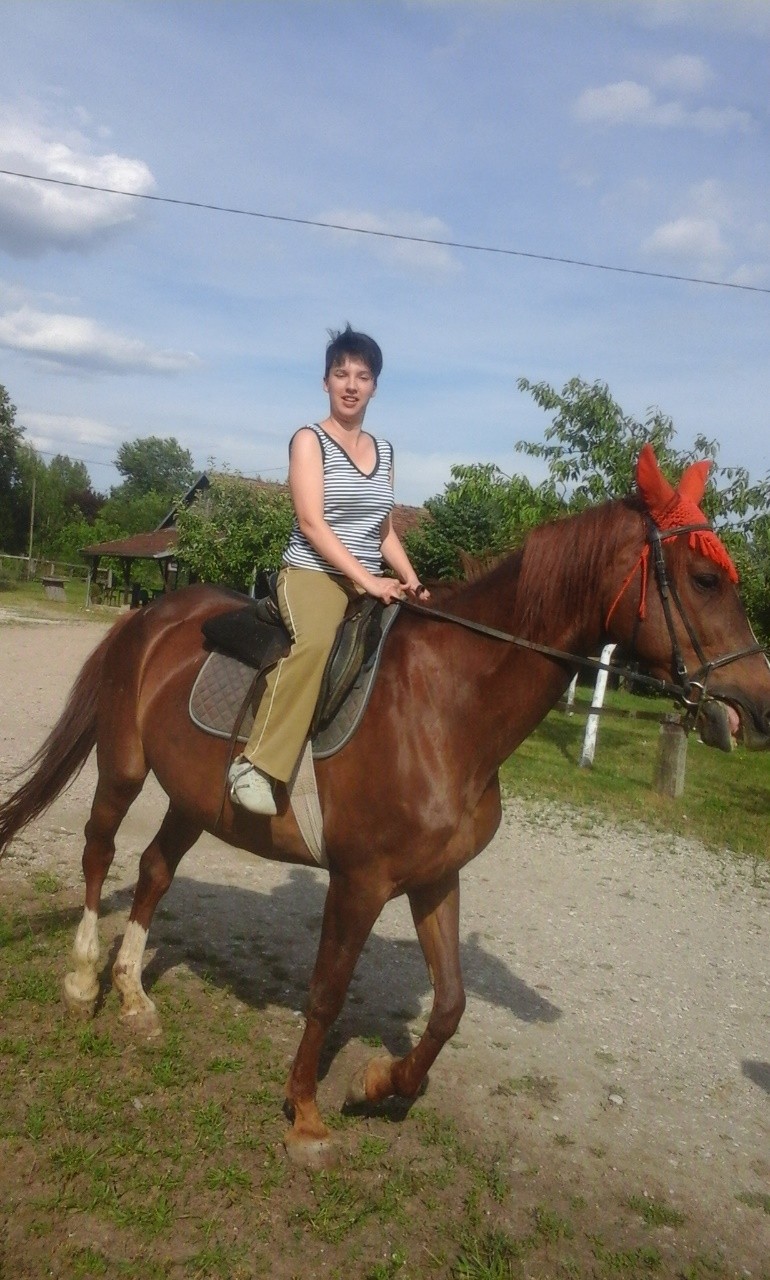
FUN FACT
Reward the horse you rode with a small treat as a thank you. Horses love carrots, apples and sugar cubes.
04 / EXPERIENCE AND FITNESS
DO YOU NEED ANY EXPERIENCE OR SPECIAL PHYSICAL FITNESS?
You don't need any previous knowledge or special physical fitness to start riding. Riding schools and equestrian clubs adapt their programmes for complete beginners, starting with the basics — from meeting and saddling the horse to your first steps in the saddle.
Physical effort
Although you don't need to be in peak physical condition, horse riding is an activity that engages the entire body. The leg muscles work particularly hard, especially the inner thighs, along with the abdominal and back muscles used to maintain balance.
Muscle soreness after the first few sessions is completely normal.
Weight restrictions
There is no upper age limit for horse riding. Adults can begin at any stage of life for recreation, stress relief and spending time outdoors.
One common restriction for adults at riding clubs relates to the maximum rider weight, most commonly around 85–95 kg, depending on the build and size of the horses available at the stable.
Equipment
For your first lesson, all you need is comfortable clothing — long, stretchy trousers such as leggings or tracksuit bottoms — and closed shoes with a flat sole, such as trainers or boots.
The club will usually provide a safety helmet. Avoid jeans and clothing that restricts movement. A light jacket or sweatshirt can be added depending on the weather.
What you really need at the beginning is a positive attitude, a little patience and the ability to relax around animals.
05 / CHOOSING A CLUB
HOW DO YOU CHOOSE A RIDING CLUB OR RIDING SCHOOL?
Choosing a riding club depends on several factors.
“When choosing a riding club, it is important to consider several factors: location, the services offered (riding school, recreation, sport), the experience of the instructors, the conditions in which the horses are kept and the overall atmosphere. Visit the stables, talk to the instructors and observe whether the horses are healthy and well cared for. A good riding club will first and foremost love and respect its horses, and only then offer services.”
Animalogic CooperativeA few riding club recommendations
- Hipodrom Zagreb
- KK Hiperion
- Jockey Club
- KK Trajbar Team, Zaprešić
- Konjički klub M Stables, Samobor
06 / CLOTHING AND EQUIPMENT
WHAT SHOULD YOU WEAR, AND DO YOU NEED TO BUY EQUIPMENT STRAIGHT AWAY?
Comfortable tracksuit bottoms or leggings are all you need to wear.
Avoid jeans and clothing that restricts movement. A light jacket or sweatshirt can be added depending on the weather.
Trainers or low ankle boots with a flat sole are suitable footwear. They should not have an excessively wide or heavily treaded sole that could become caught in the stirrup.
Riding clubs provide riding helmets.
Buying riding equipment straight away is not recommended. If you decide to take riding more seriously or enrol in a riding school, you can then invest in additional equipment — riding boots, a helmet and riding gloves.
07 / SAFETY
HOW SHOULD YOU BEHAVE AROUND HORSES?
Horses are herd animals. They like peace and quiet.
Their hearing is more sensitive than ours, so running in the stable should be avoided, and young children should only be in the stable when accompanied by an adult.
Dogs should always be kept on a lead.
Only enter a stall or grooming area when necessary and with an instructor present.
Large jewellery that could interfere while riding and using mobile phones in the stable are not recommended.
Approaching a horse
- Let the horse know you're there by using your voice.
- Wait for a reaction.
- Read the horse's body language correctly.
- Approach the horse from the front.
Source: Don Kihot, 2026.
08 / FEAR
WHAT IF SOMEONE IS AFRAID OF HORSES OR NERVOUS ABOUT GETTING IN THE SADDLE?
Fear is the body's response to an imagined or real threat.
Fear begins in the mind. And that is also where working through fear can begin.
When booking your first riding lesson, tell the instructor about your fear.
“Repeated exposure to frightening situations on a horse that people have gradually learned is capable, safe and able to protect them soon leads to a reduction in fear — even fear they previously rated as a 10, the strongest fear imaginable. After overcoming such a strong fear, people are then able to explore their limits in other areas as well, discovering the benefits of life without unnecessary fear.”
Geronimo, 2026.09 / COMMON BEGINNER MISTAKES
WHAT SHOULD YOU PAY ATTENTION TO?
Holding the reins too tightly
Beginners often use the reins to maintain their balance. This can be very painful for the horse because its mouth is extremely sensitive.
Balance should come from your body and seat, not from your hands.
Looking down at the horse or your hands
A natural reflex is to look where you're going, but riders often look down at the horse's head or neck.
This affects balance, causes the back to round and reduces awareness of the space around you.
Squeezing the horse with your legs when frightened
When beginners become afraid, they often instinctively squeeze the horse with their thighs and calves.
To the horse, this can be a signal to speed up — effectively saying “go faster” — creating a cycle of increasing fear.
Raised heels
Keeping your heels raised instead of pointing them downwards can allow the foot to slip further through the stirrup, which can be dangerous in the event of a fall.
Reins that are too short or too long
Reins that are too loose can reduce control, while reins that are too short and tight continually put pressure on the horse.
Finding the right balance is essential.
10 / FROM EXPERIENCE
WHAT DO I WISH I HAD KNOWN WHEN I STARTED?
Horses sense your emotions before you do anything
Horses are prey animals and are incredibly good at reading body language and energy.
If you're tense, frightened or angry, the horse will sense it and may become nervous. Staying calm and breathing deeply are some of the best tools for controlling the situation.
Riding is teamwork, not operating a machine
A horse is not a bicycle or a car.
It has its own “good and bad days,” its own fears and its own personality.
Instead of trying to overpower the horse, you need to learn how to communicate with it.
Progress is not a straight line
Some days will be perfect, while others may feel as though you're back at your first lesson.
There will be sore muscles, frustration and possibly falls. All of this is part of the process and completely normal.
Over the years you gain experience, but that doesn't mean you'll suddenly know everything or never need to ask another question.
Horse riding is a lifelong learning process.
The right equipment makes a difference
Good riding leggings with grip and boots with a small heel are not about fashion, but about safety and stability in the saddle.
Good equipment, particularly a helmet and boots, is one of the most important investments once you decide to continue.
Falls happen and they are not the end of the world
Almost every rider has fallen from a horse.
Fear of falling can often slow progress. Riding schools can also teach you how to fall more safely and reduce the risk of injury.
If it happens, and you are not injured, getting back in the saddle can help prevent fear from taking over.
11 / IF YOU LIKE IT
HOW DO YOU CONTINUE AFTER YOUR FIRST LESSON?
If you enjoyed horse riding after your first lesson — congratulations!
You've joined a small group of people who know what they want.
The next step is to express your interest in a riding school. This is followed by a conversation with the riding instructor.
Anyone interested in a riding course will have an introductory conversation about the duration of the beginner course, which is usually around five weeks.
During the beginner course, you'll get to know the horse, learn how to saddle and bridle it independently, start, stop and steer the horse, practise basic manoeuvres, work on balance in trot, move between rising trot and a half-seat position, and repeat everything covered during the beginner course.
Sources
- Don Kihot. 2026. Pravila ponašanja na jahalištu. donkihot.hr
- Geronimo. 2026. Strahovi. geronimo.hr
- Selected materials on the basics of horse riding — Škola jahanja Hipodrom Zagreb.
- Hrvatski konjički savez. Udžbenik Jahačka dozvola HKS. konjicki-savez.hr
- Selected chapters from the textbook for the Competition Licence exam — Hrvatski konjički savez.
- Selected chapters from the textbook for the Coaching Licence exam — Hrvatski konjički savez.
- Selected materials on the basics of horse riding — Škola jahanja Hipodrom Zagreb.
- Animalogic Cooperative. Vodič kroz najbolje konjičke klubove u Hrvatskoj: za sport, rekreaciju i ljubav prema konjima. horses.hr